Quick Verdict: Fire-Boltt — India’s third-largest smartwatch brand — has entered the smartphone market with two budget devices aimed squarely at the sub-₹15,000 segment that’s been hollowed out by rising component costs. The Boltt Evo (4G) and Boltt Ace 5G both pack large 6.79-inch 120Hz displays, 6,000mAh batteries, punch-hole cameras, and genuinely bloatware-free software — a lot of “why doesn’t every budget phone do this” thinking packed into a first-generation product. But a few independent post-launch checks are worth knowing before you buy, including a display resolution discrepancy and benchmark scores that reportedly ran higher in press units than retail ones.
Note: This hands-on unit was provided by Fire-Boltt/Boltt as part of a media collaboration ahead of launch.
Who Is Fire-Boltt, and Why Does This Launch Matter?
Fire-Boltt isn’t a brand-new company — it’s India’s third-largest smartwatch brand by market share (roughly 9.7%), having sold wearables to over 40 million Indian customers. “Boltt” is a newly created sub-brand specifically for this smartphone push, reportedly backed by a $50 million-plus investment, with an initial sales target of 500,000 to 1 million units. In other words, this isn’t a random new phone brand — it’s an established wearables company trying to convert its existing customer trust into smartphone sales, in a similar playbook to what Mivi and a few other Indian wearable brands are also attempting.
The timing is deliberate: with global RAM, storage, and chipset shortages pushing up prices across the industry, the traditional sub-₹15,000 “budget” segment has been largely abandoned by established brands. Boltt is positioning both phones directly into that gap.
Boltt Evo & Boltt Ace 5G: Official Pricing
Both phones officially launched August 25, 2026, with sales starting September 1, 2026 at 12:00 PM IST, exclusively on Flipkart.
| Model | Variant | MRP | Day-one launch price |
|---|---|---|---|
| Boltt Evo (4G) | 4GB + 64GB | ₹10,999 | ₹9,999 |
| Boltt Evo (4G) | 6GB + 128GB | ₹11,999 | — |
| Boltt Ace 5G | 4GB + 64GB | ₹13,999 | ₹12,999 |
| Boltt Ace 5G | 6GB + 128GB | ₹14,999 | — |
| Boltt Ace 5G | 8GB + 128GB | ₹15,999 | — |
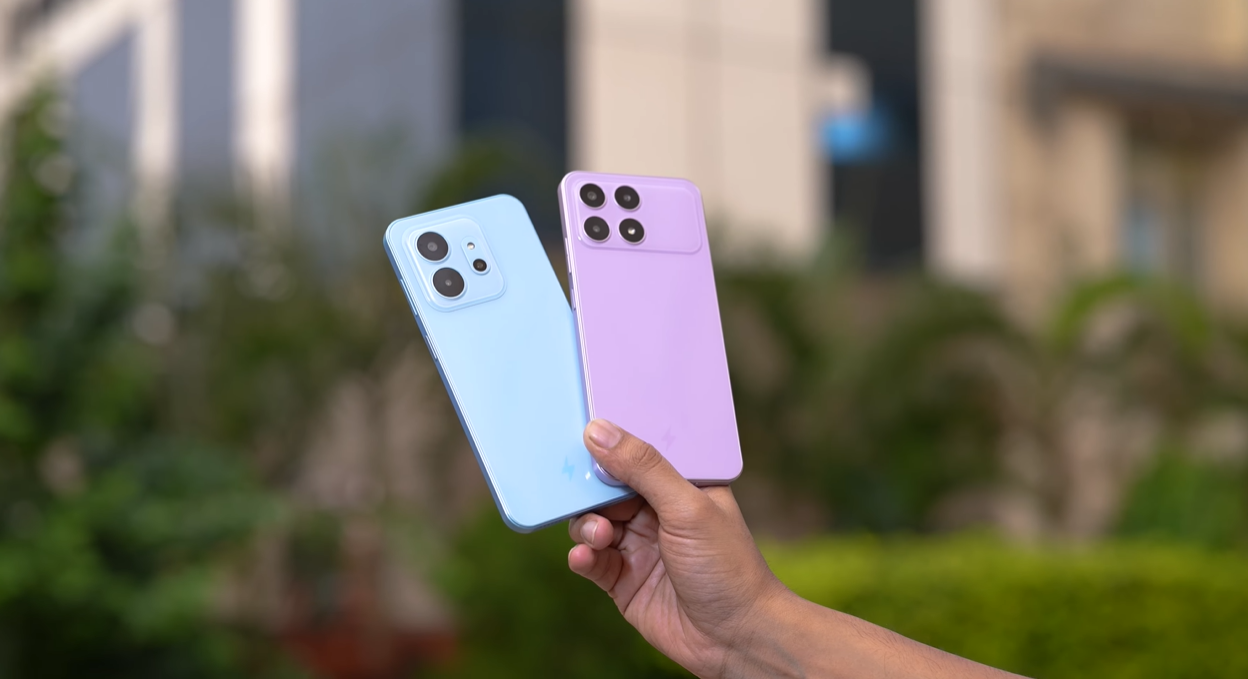
An additional ₹1,000 instant discount applies at checkout during the launch window. The Evo comes in Sky Blue, Midnight Black, Lavender Bloom, Berry Red, and Arctic White; the Ace 5G swaps Berry Red for Burgundy Bliss and Forest Green.
Design and Build
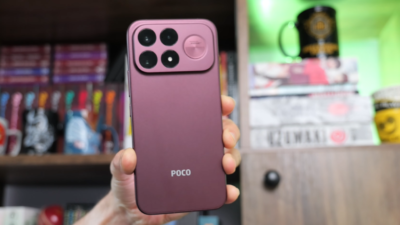
Both phones use a glossy polycarbonate back with a plastic frame. In-hand feel is described as fairly standard for the budget segment — nothing that stands out as premium, but nothing alarming either, with the phone feeling slightly on the longer side. Both share the same 6.79-inch punch-hole display size and design language, differing mainly in rear camera module styling and color options
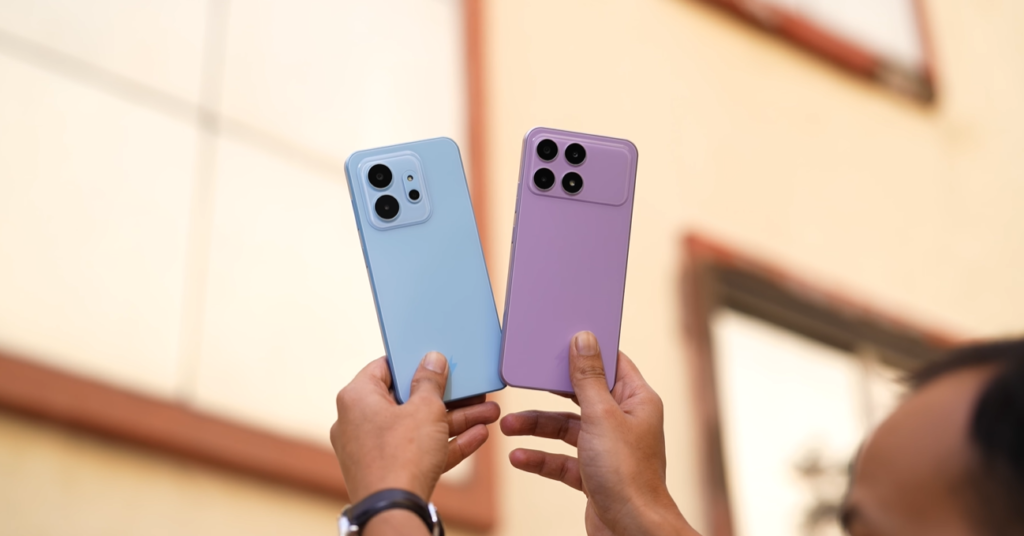
A note worth flagging: independent teardown/spec-sheet analysis published after launch found both phones to be noticeably thicker and heavier than Boltt’s own announcement specifications initially indicated. If exact dimensions and weight matter to you, it’s worth double-checking the final retail listing on Flipkart rather than relying solely on early marketing specs.
Display: HD+ Panels — But Check Which Resolution You’re Actually Getting
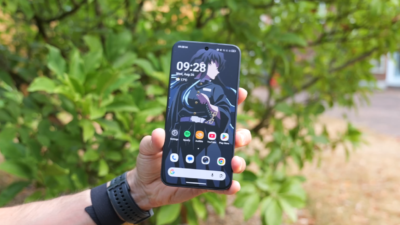
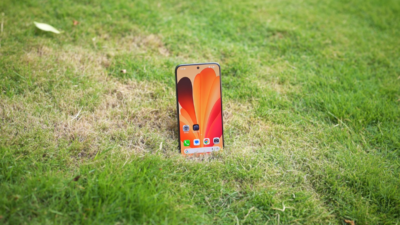
Here’s a genuine point of confusion worth addressing directly. Hands-on impressions (and Boltt’s own initial announcement) describe both phones as using a 6.79-inch, 120Hz LCD punch-hole display with up to 600 nits peak brightness — consistent with what you’d expect at this price point, and notably including a punch-hole cutout rather than a dated water-drop notch on both models, which is a nice touch for phones priced under ₹15,000.
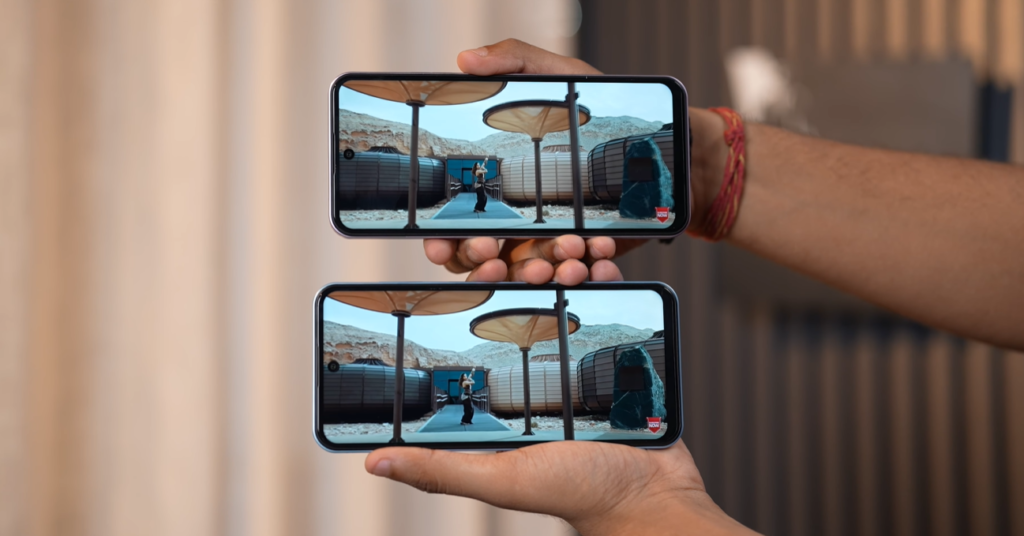
However, once official Flipkart retail listings went live, the confirmed resolution across both phones was specified as 720×1640 (HD+) — some early coverage had implied a sharper panel might be used. If display sharpness for text and detailed content matters to you, go in expecting standard HD+ clarity rather than anything higher, regardless of what any pre-launch materials may have implied.
Colors on the IPS LCD panel are reasonable but noticeably less punchy/contrasty than AMOLED, which is expected given the panel type and price point. Bezels are on the thicker side, typical for this segment.
Physical Layout and Connectivity
- Right edge: volume buttons, physical power button doubling as a fingerprint scanner
- Top edge: noise cancellation mic
- Left edge: nothing
- Bottom edge: SIM slot, USB-C port, single speaker
Both phones use a hybrid SIM slot supporting either dual SIM or one SIM plus a memory card. The Boltt Evo (4G-only) retains a 3.5mm headphone jack; this wasn’t specifically confirmed for the Ace 5G. Both use a single (mono) speaker setup.
Camera
- Boltt Ace 5G: 64MP main camera (f/1.8 aperture) + 8MP front camera
- Boltt Evo: 50MP main camera + 2MP macro sensor + 8MP front camera
Both include Google’s AI imaging features — Face Unblur and Night Mode — despite the budget positioning, which is a genuinely notable inclusion at this price tier. Camera testing wasn’t extensive given the segment, but output was described as in line with typical budget-phone photo quality — decent, not exceptional. Camera modes include Panorama, Portrait, Pro mode, and standard Capture mode, with video recording capped at 1080p/30fps on both front and rear cameras for both phones.
Performance
- Boltt Ace 5G: UNISOC T8200 chipset
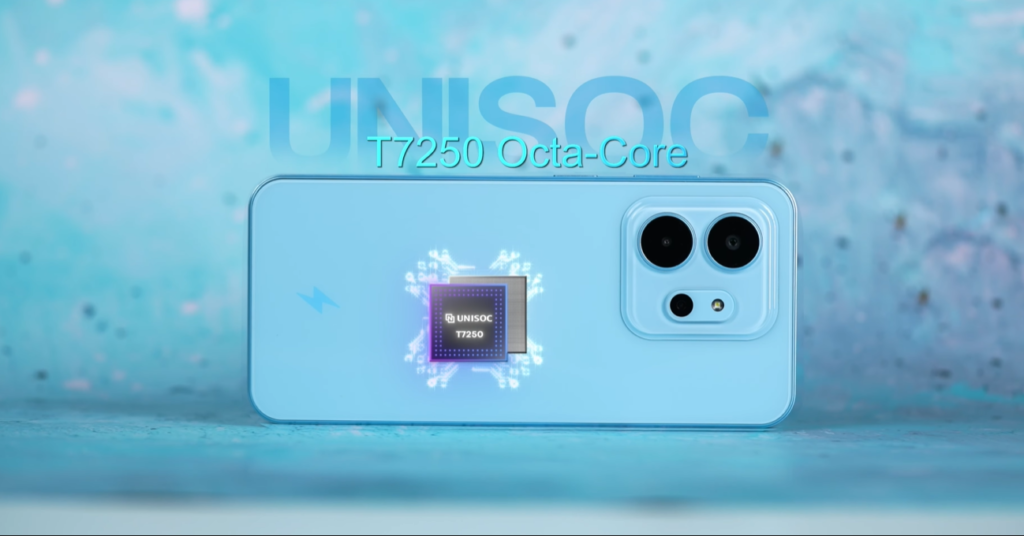
- Boltt Evo: UNISOC T7250 chipset
In hands-on benchmark testing, the Ace 5G scored 645,000+ on AnTuTu — a genuinely solid result for a sub-₹15,000 phone, especially given current chipset pricing pressure — with a fully stable CPU throttle test graph showing no thermal throttling. The Evo scored 395,000+ on AnTuTu (roughly 4 lakh), reflecting its more basic 4G-focused chipset.
An independent accuracy check worth knowing: post-launch third-party testing on retail units reportedly found benchmark scores sitting meaningfully below what was shown in pre-launch press demonstrations. This kind of gap between review-unit and retail-unit performance isn’t unique to Boltt, but it’s a reasonable reason to treat pre-launch benchmark figures (including the ones above) as best-case numbers rather than guaranteed retail performance, and to look for retail-unit reviews once the September 1 sale begins.
Both phones are positioned for light, everyday use — calling, WhatsApp, YouTube, social media, UPI payments, and casual gaming — rather than demanding gaming or professional camera work.
Battery and Charging
Both phones share an identical 6,000mAh battery — a genuine strength at this price point. The difference is charging speed: the Ace 5G ships with an 18W charger in the box, while the Evo includes a 10W charger.
RAM, Storage, and Connectivity
Storage starts at 4GB RAM/64GB storage on both models, with a 128GB option available on higher variants. The Ace 5G supports 5G, while the Evo is 4G-only — a meaningful differentiator if network future-proofing matters to you. Both support dual SIM, Bluetooth 5.0, and — genuinely surprising at this price point — NFC support on the Ace 5G (not included on the Evo).
Software
Both phones run Android 16 with a confirmed 3 years of OS updates and 4 years of security updates — a strong commitment for a first-generation product from a new phone brand. Bloatware is essentially absent: aside from an FM radio app and Boltt’s own service center app, there’s no unnecessary pre-installed software, which stood out positively in testing. AI features include Google Gemini, Live Gemini, Circle to Search, and Google Lens.
Warranty and After-Sales Service
Boltt has confirmed a standard 1-year nationwide warranty on both phones. The company has also built a “Boltt Care” app into the software, providing access to brand information, user manuals, and direct customer service requests. According to information shared by the Boltt team, the brand currently has 250+ service centers across India, run through a third-party service partnership, with support available via phone, WhatsApp, and a dedicated WhatsApp chatbot. Boltt has also published spare parts pricing transparently on its website — a genuinely reassuring transparency move for a first-generation phone brand, where after-sales support is historically the biggest question mark.
If you’re considering either phone, it’s worth checking Boltt’s website or app to confirm there’s an active service center reasonably close to you before purchasing.
Should You Buy the Boltt Evo or Ace 5G?
For the price, both phones check a lot of boxes that budget phones at this tier often skip — a punch-hole display instead of a notch, a genuinely large battery, bloatware-free software, and even NFC on the Ace 5G. The pricing itself is competitive against similarly positioned budget options like the Lava Virat V1 series and itel’s budget lineup.
That said, this is a brand-new smartphone brand’s first product line, and the real test for any new entrant isn’t day-one specs — it’s long-term software update delivery, build quality consistency across retail units, and whether that 250+ service center network holds up in practice. Given the display resolution clarification and the gap between press and retail benchmark scores noted above, it’s worth waiting for independent retail-unit reviews after the September 1 sale before treating any pre-launch figures as final.
FAQ
The Boltt Evo starts at ₹10,999 (₹9,999 with the launch-day discount), and the Boltt Ace 5G starts at ₹13,999 (₹12,999 with the launch-day discount). Both go on sale September 1, 2026 on Flipkart.
The Evo is a 4G-only phone with a UNISOC T7250 chipset, a 50MP main camera, and a 10W charger. The Ace 5G supports 5G, uses a more powerful UNISOC T8200 chipset, has a 64MP main camera, NFC support, and an 18W charger.
Boltt is a new smartphone sub-brand from Fire-Boltt, an established Indian wearables company with over 40 million customers and roughly 9.7% smartwatch market share. As a first-generation smartphone product line, long-term software support and service quality are still unproven, though the company has confirmed 250+ service centers and multi-year update commitments.
No, both use IPS LCD panels at 720×1640 (HD+) resolution with a 120Hz refresh rate, not AMOLED.
Would you consider a first-generation phone from a smartwatch brand at this price point, or would you rather wait for retail-unit reviews first? Let us know in the comments below.