Quick Verdict: The Realme P4s 5G leans fully into gaming-focused value — a 144Hz, 1.5K AMOLED display using Samsung’s latest M14 panel material, a dedicated dual-chip gaming setup (Dimensity 7400 Ultra + HyperVision+ AI chip), a massive 7,000mm² vapor chamber, and near-1-million AnTuTu scores. Camera performance is solid rather than exceptional, but portrait shots in particular stood out in testing. Now officially launched, pricing lands at ₹34,999 (effectively ₹31,999 with bank discount) for the base variant — close to, but a notch above, the ₹30,000 the reviewer originally speculated pre-launch.
Note: This hands-on unit was provided by Realme as part of a media collaboration ahead of launch.
Realme P4s 5G: Confirmed Official India Pricing
Realme has officially launched the P4s 5G in India, with first sales beginning September 3, 2026 via Flipkart, Realme.com, and select retail stores:
| Variant | MRP | Effective price (with ₹3,000 bank/exchange offer) |
|---|---|---|
| 8GB + 128GB | ₹34,999 | ₹31,999 |
| 8GB + 256GB | ₹37,999 | ₹34,999 |
| 12GB + 256GB | ₹41,999 | ₹38,999 |
A 12-month no-cost EMI option is also available. The phone comes in two colors: Electric Cyan and Titanium Grey.
Design: A Genuine Departure From Typical Budget Design
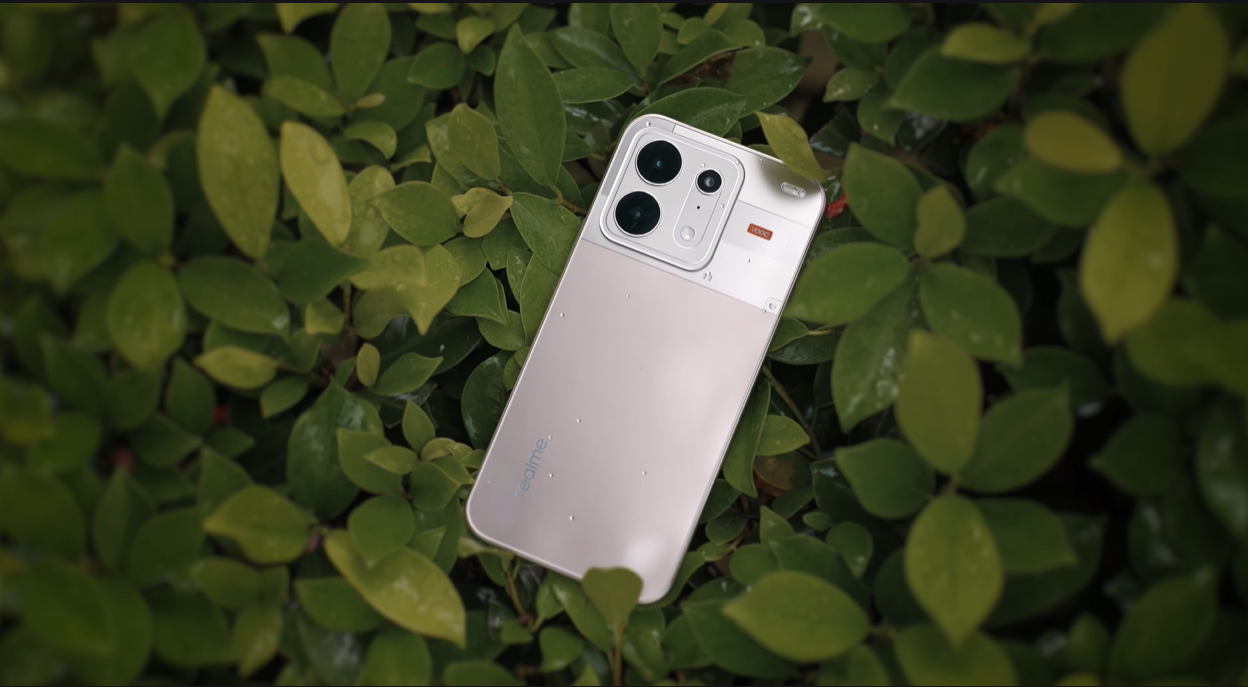
Realme is calling this design language “Premium Trend Tech,” inspired by transparent/translucent aesthetics. The back is polycarbonate but has a glass-like appearance, and the frame is polycarbonate as well. In-hand feel was described as genuinely premium, with a thickness that’s neither too thick nor too thin.
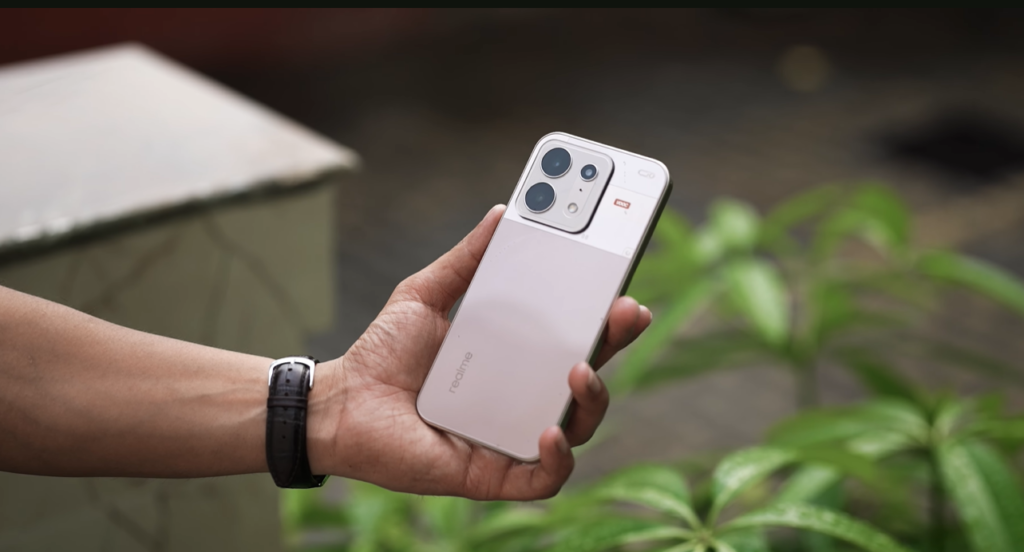
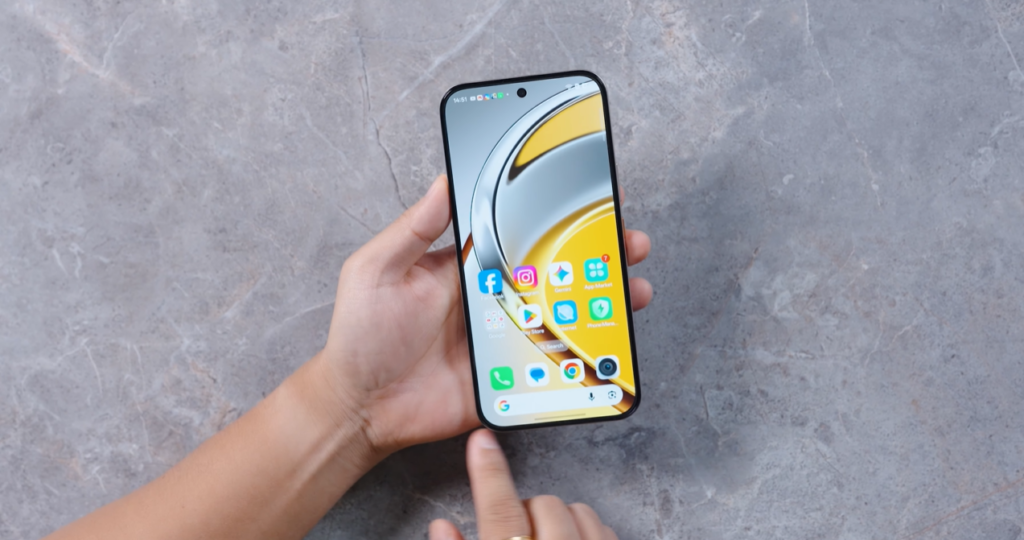
Weight test: Guessed at 209g before testing; actual measured weight landed close to that estimate in the 200–210g range.
The phone is IP66, IP68, and IP69 rated — meaning it can withstand full submersion, not just splashes, a notably comprehensive durability certification for this price segment.
Display: The Standout Feature
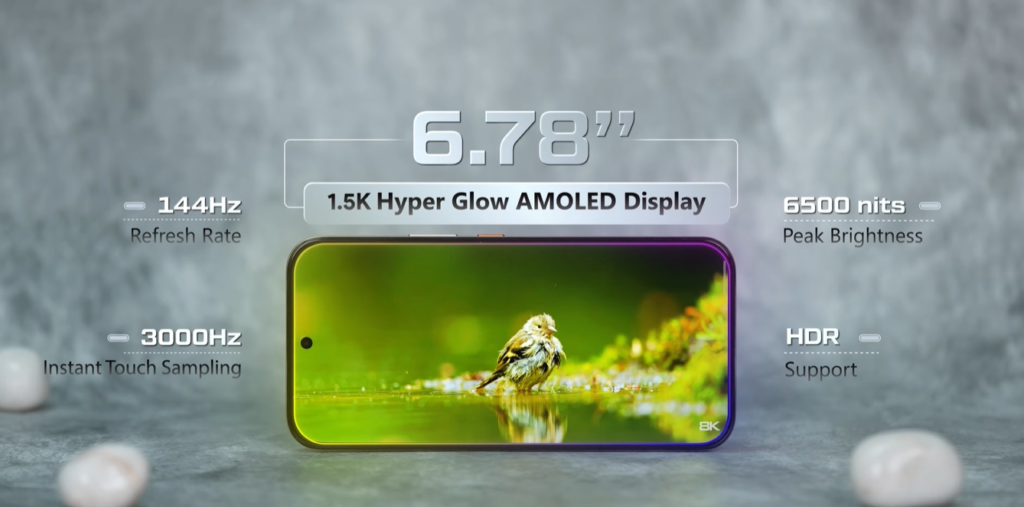
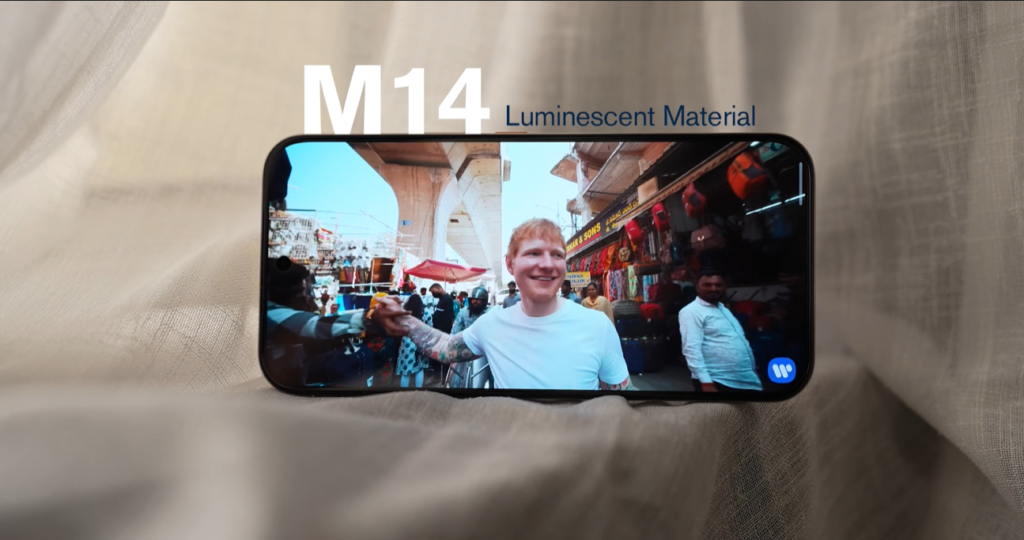
This is where the P4s 5G makes its strongest impression. It uses a 6.78-inch, 1.5K resolution, 144Hz “HyperGlow” AMOLED display — built on Samsung’s latest-generation M14 luminescent material, which Realme says contributes to superior brightness, color vibrancy, and punchiness compared to standard AMOLED panels.
Confirmed display specs:
- 6.78-inch, 1.5K resolution, 144Hz AMOLED (Samsung M14 panel)
- Peak local brightness: up to 6,500 nits
- HBM brightness: up to 1,800 nits
- 100% DCI-P3 color gamut
- PWM dimming support
- AGC DT Star D+ glass protection
- TÜV certification
- SDR content support at up to 2160p video playback
- Symmetrical bezels on all sides
In hands-on testing, display quality was repeatedly highlighted as a genuine highlight — smooth motion, vibrant colors, and strong detail retention even in full-screen video playback, with the reviewer specifically calling out the screen-to-body ratio and overall detailing as standout for this price bracket.
Physical Layout and Haptics
- Right edge: orange-accented power button, volume buttons above it
- Top edge: noise cancellation mic, speaker
- Left edge: nothing
- Bottom edge: dual SIM slot (no memory card expansion), USB-C port, speaker
Face unlock and an in-display fingerprint scanner are both supported. Haptic feedback while typing was described as a soft, typical “Realme-style” vibration.
Speaker test: Confirmed stereo speaker setup, tested at up to 300% system volume with a genuine surround-sound-like listening experience — rated as a strong point with no complaints.
Camera: Balanced, With Portrait Mode as a Genuine Strength
The rear setup includes a 50MP main camera with a Sony sensor and OIS, paired with an 8MP ultra-wide lens. The front camera is 16MP.
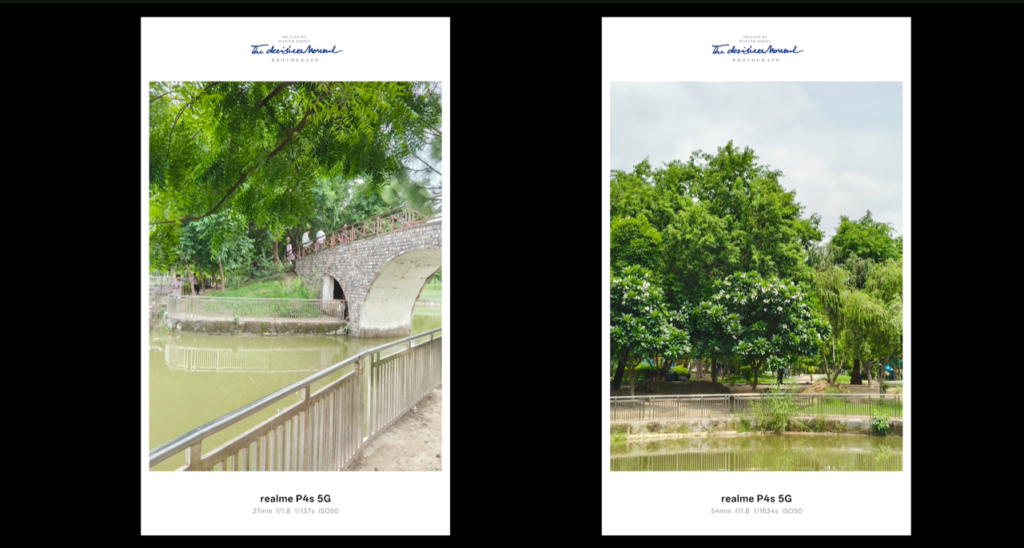

Camera test results:
- Shutter speed: Fast and responsive focus in testing.
- Color accuracy: Orange rendered as orange, green as green, purple as purple — attributed to Sony sensor color tuning, described as accurate across testing.
- Portrait mode (1x and 2x/54mm): Called out as a genuine highlight — very good picture quality, sharp detail on zoom-in, strong edge detection, good color reproduction with slightly warm skin tones. Described as consistently producing strong portrait results.
- Normal/daylight mode: Reasonable detail and skin tone reproduction, with photos leaning slightly saturated (which the reviewer noted most users tend to prefer).
- HDR handling: Decent.
- Low light: Good detail retention with comparatively low noise.
- Ultra-wide camera: Rated as average, with reduced detail given the 8MP sensor resolution.
- Edge detection: Noted as an area needing further refinement, particularly in portrait mode.
Video recording supports 4K at 30fps on the rear camera, with OIS support carrying over into 4K video. The front camera is limited to 1080p/30fps, with no 4K front recording. Additional shooting modes include Pro mode, high-resolution panorama, street/food-focused modes, pro video, slow motion, time-lapse, dual-view video, and underwater shooting mode.
Performance: Full Benchmark Results
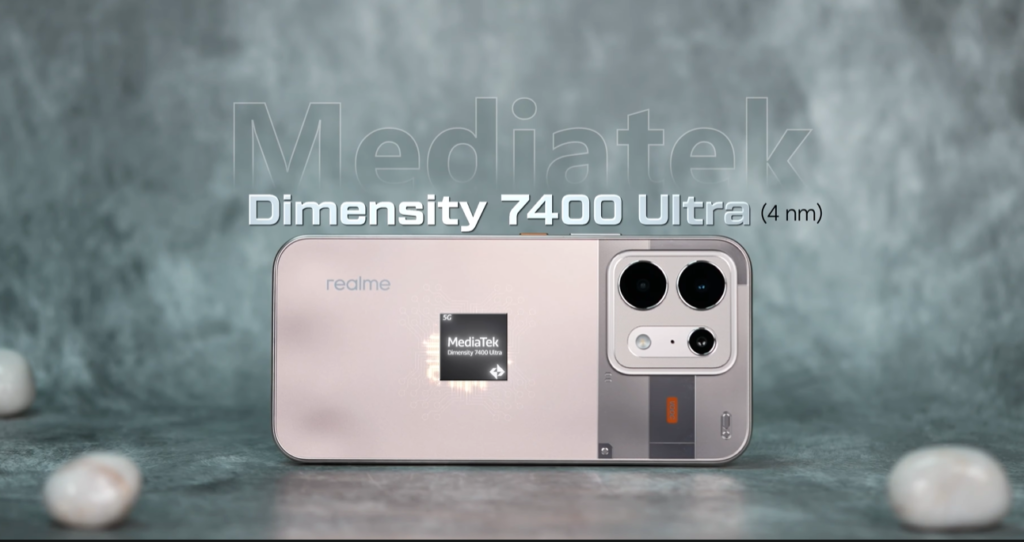
The Realme P4s 5G is built around a genuinely distinctive “dual-chip” gaming architecture: a MediaTek Dimensity 7400 Ultra (4nm) paired with a dedicated HyperVision+ AI chip handling graphics rendering, frame-rate upscaling, and AI-based resolution enhancement — plus a large 7,000mm² vapor chamber cooling system.
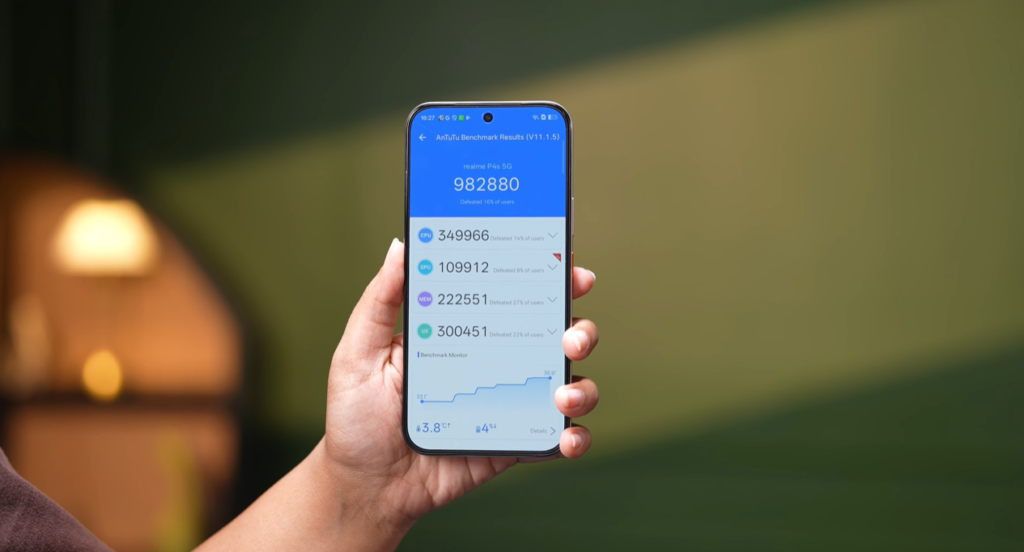
Complete benchmark results:
| Test | Result |
|---|---|
| AnTuTu score | 982,000+ (near 1 million) |
| CPU throttle test | Fully stable graph — no throttling observed |
| Geekbench GPU score | 2,820 |
| Geekbench multi-core score | 3,000 |
| BGMI native frame rate | 90fps (Ultra HDR / Extreme graphics settings) |
| BGMI frame-interpolated rate | Up to 144fps via “Hyper Motion” mode |
| Wild Life stability test | 99.6% |
The 144fps gaming figure is achieved through frame interpolation via the phone’s Hyper Motion setting in the game dashboard — not a native 144fps render, but a smoothing technique that meaningfully improves perceived motion clarity during gameplay. Native BGMI gameplay testing at 90fps showed smooth, lag-free performance throughout extended play.
RAM and storage: 8GB/128GB, 8GB/256GB, and 12GB/256GB variants, using LPDDR4X RAM and UFS 3.1 storage.
The reviewer’s honest framing: a few years ago, ₹30,000 phones offered more raw processing power than this chipset delivers — but given current industry-wide chipset and RAM pricing pressure, the Dimensity 7400 Ultra paired with the dedicated gaming chip was assessed as a genuinely good, appropriately balanced choice for this price tier in 2026’s market conditions.
Battery and Charging
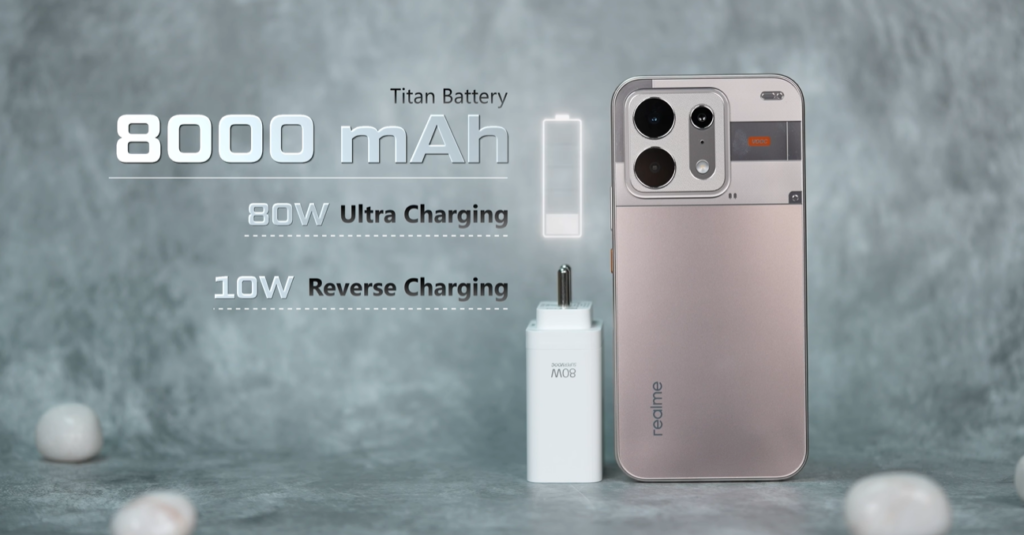
An 8,000mAh battery anchors the package, paired with 80W “SuperVOOC-style” fast charging (Realme’s own branding), reverse wired charging support, and a bypass charging mode specifically aimed at gamers who want to play while plugged in without additional battery wear. Realme claims roughly 28 minutes to reach 50% charge. No battery life compromises were noted in testing given the combination of capacity and charging speed.
Software
Ships on Realme UI 7, based on Android 16, with 3 years of OS updates and 4 years of security updates confirmed. Some pre-installed bloatware is present (removable). AI features include AI Snap Mode, AI Edit Genie 2.0, AI Instant Clip (for quick video clip generation), Live Gemini, and Circle to Search.
Connectivity: Bluetooth 5.4, 5G support, dual-band Wi-Fi, USB 2.0. No NFC.
Realme P4s 5G: Who Should Buy It?
If gaming performance, display quality, and battery life are your top priorities in the ₹30,000–₹40,000 range, the P4s 5G’s combination of a genuinely premium-feeling 144Hz AMOLED panel, a dedicated dual-chip gaming setup, and a large, fast-charging battery makes a strong case — particularly against rivals in this segment still shipping HD+ displays or non-OIS cameras. The main trade-offs are a slightly higher-than-initially-expected price and an ultra-wide camera that lags behind the main sensor’s quality.
FAQ
The base 8GB+128GB variant is priced at ₹34,999 (₹31,999 effective with bank discount). The 8GB+256GB variant is ₹37,999 (₹34,999 effective), and the 12GB+256GB variant is ₹41,999 (₹38,999 effective). Sales begin September 3, 2026.
A MediaTek Dimensity 7400 Ultra (4nm) paired with a dedicated HyperVision+ AI chip specifically for gaming-related graphics processing — Realme’s “dual-chip” gaming architecture.
Native gameplay in titles like BGMI runs at up to 90fps; 144fps is achieved through frame interpolation via the phone’s Hyper Motion mode rather than native rendering.
Yes, the 50MP main camera includes OIS (optical image stabilization), though the 8MP ultra-wide lens does not.
Is the Realme P4s 5G’s dual-chip gaming setup and display enough to win you over at this price, or would you rather wait for the September launch wave covered in our upcoming phones roundup? Let us know in the comments below.